As a Certified Health Education Specialist and Program Manager for Rural Health at the American Academy of Pediatrics (AAP), Rosalinda Saucedo is leading the charge to expand pediatric care access in rural and underserved communities. With over 25 years in the field, Saucedo brings both lived experience and professional expertise to her work—developing innovative, scalable solutions that support children’s health where resources are limited but needs are great.
Building Rural Capacity Through the ECHO Model
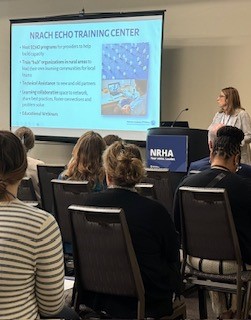 For the past several years, she’s helped build the infrastructure and strategy behind the National Rural Adolescent and Child Health (NRACH) ECHO Training Center, a national initiative that equips rural pediatric providers with continuing education and practical tools to better support children and families.
“I’m most proud of being part of the launch of the NRACH ECHO Training Center,” she shared. “We’ve grown our cohorts, built strong rural partnerships, and developed virtual trainings that meet providers where they are—whether it’s during clinic hours, lunch breaks, or in regions with limited connectivity.”
Through virtual learning models like ECHO, Rosalinda and her team help build provider confidence in addressing pediatric mental and behavioral health, substance use, adolescent communication, and childhood obesity—topics that are both timely and challenging in rural settings. Many of the sessions are recorded and available asynchronously, offering flexibility for busy healthcare professionals and CHES®/MCHES® credential holders alike who may want to pursue Category II continuing education credit.
From Community Roots to Systems-Level Change
Rosalinda’s passion for health education is deeply personal. Having spent most of her childhood in an underserved community in Aurora, Illinois and later growing up in a rural area of Mexico, she was drawn early on to prevention and community health. Originally planning to attend medical school, Rosalinda reached a turning point while working for a pediatrician in her hometown during high school and college. As she observed his work in the community, he encouraged her to think beyond the clinic walls.
“He told me, ‘We need more people focused on prevention, so we don’t have to treat these chronic issues later,’” Rosalinda recalled. “Hearing that from someone I respected—and seeing the real impact of preventive care in an underserved community—completely shifted my path. That statement changed everything for me.”
After earning her graduate degree in Community Health Education and Promotion, she began her career in grassroots education—conducting health education at a local Federally Qualified Health Center (FQHC) clinic where her own family had once received care. Over time, she transitioned into program management to scale her impact.
“I realized that to make real, lasting change, I needed to be involved in the systems that shape health—not just respond to them.”
Today, Rosalinda leads national projects that span strategic planning, evaluation, stakeholder engagement, and technical assistance. As a one-woman powerhouse (with a strong ECHO support team), she ensures that the voices and needs of rural pediatric providers are embedded in every stage of program design and delivery.
Why CHES® Still Matters—16 Years Later
Rosalinda credits her CHES® certification back in 2009 as a foundational part of her career.
“It’s a diverse skill set that you’ll use no matter what area you go into,” she said. “Everything in the Areas of Responsibility—planning, evaluation, communication,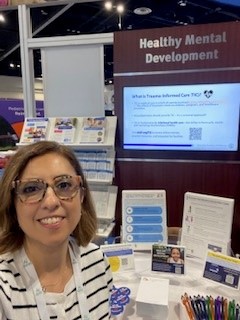 leadership—I incorporate all of it in my role.”
Encouraged by a mentor during graduate school, she took the exam shortly after completing her degree and believes it helped set her apart in the job market. “It gave me instant credibility. It shows employers that you understand evidence-based practices and that you’re committed to ongoing growth.”
Now, she’s eyeing the MCHES® as her next professional goal and is actively looking for ways to give back to the credentialing community through board service and volunteerism.
“The MCHES® certification feels like the natural next step for me,” Rosalinda shared. “So much of what I do—strategic planning, systems-level implementation, stakeholder engagement—reflects the advanced-level competencies. I’m hoping to sit for the exam early next year as part of my continued growth in the field.”
Advice for Emerging and Mid-Career Professionals
For those looking to enter or pivot into rural health or pediatric systems, Rosalinda offers this insight:
- Understand the nuance. “Rural health has unique constraints. Success may look different in this sector: it’s about trust, small wins, and partnerships.”
- Be open to hard things. “If it feels difficult, that probably means you’re doing something important. Don’t shy away from complex work.”
- Grow your skills across disciplines. “The more comfortable you are navigating systems, the more effective you’ll be.”
- Say yes to new experiences. “Even if a job or project doesn’t seem like a perfect fit at first, it may build expertise you didn’t know you needed.”
She also urges certified professionals to uplift others along the way, particularly community health workers and paraprofessionals already doing the work on the ground. “We need to invest in people who are already in these communities, doing the work with heart. Let’s help them grow into CHES® or MCHES® leaders too.”
Looking Ahead
Rosalinda hopes to continue infusing a rural lens into all aspects of her work, from pediatric mental health to public health emergency planning. Long-term, she’s also interested in working at the intersection of child health, immigration, and displacement.
“No matter what the project is—whether it’s mental health, substance use, or adolescent development, I always ask: how are we reaching rural providers, families, and communities? It’s not just about delivering content; it’s about building trust, reducing barriers, and making sure rural voices shape the solutions. If we’re not including them, we’re not addressing the full picture of child health in this country.”
🟢 RESOURCE SPOTLIGHT: Rosalinda encourages CHES® and MCHES® professionals to explore the NRACH ECHO Training Center website, where many past sessions are archived and available for asynchronous viewing. These include one-hour, topic-specific trainings with case studies—ideal for Category II CE credit!
🟢 Additional Resource Links: