Robyn Kade has spent her career helping people breathe a little easier—literally and figuratively. As President and CEO of the Stress Management Institute 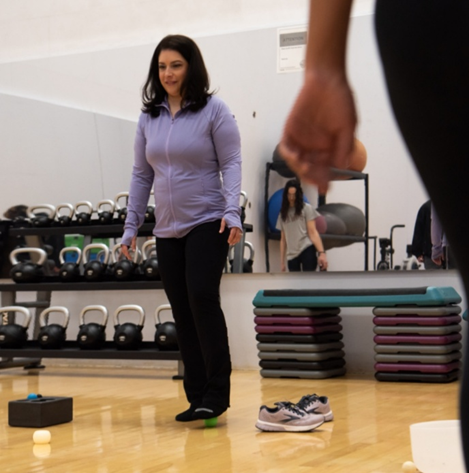 for Health & Fitness Professionals and an Adjunct Professor at Camden County College, she has devoted more than two decades to creating programs that blend movement, stress reduction, and practical support for individuals living with chronic conditions. Her work sits at the intersection of health education, fitness, and innovation—where stress relief becomes both preventive and transformative.
Blending Health Promotion, Fitness, and Stress Management
Robyn’s introduction to fitness at a young age sparked a curiosity that eventually evolved into a career centered on helping others improve their health. While working in roles like physical therapy aide, personal trainer, and group fitness instructor, she completed a BS in health promotion and fitness management and later an MA in wellness and lifestyle management at Rowan University. Her graduate studies broadened her perspective even further, strengthening her understanding of behavior change, lifestyle medicine, and the role of stress in overall wellness.
“I really enjoy blending my degrees together,” she says. “Not everybody has that to add to their training sessions.” Her master’s work added a deeper layer, giving her the tools to integrate stress-management strategies with movement and health education.
Working with clients managing conditions such as cancer, arthritis, and neurological disorders helped her recognize how heavily stress influenced their symptoms. “I could see how stress was exacerbating their conditions,” she explains. That realization pushed her toward more specialized work in stress management.
Developing a Tailored Professional Pathway in Stress Management
While still a student, Robyn began testing stress-management methods with clients and eventually created Meditative Stretch, a program initially offered to oncology patients. “They were feeling better—mentally and physically,” she recalls. Encouraged by the results, she expanded the program to individuals experiencing chronic stress, 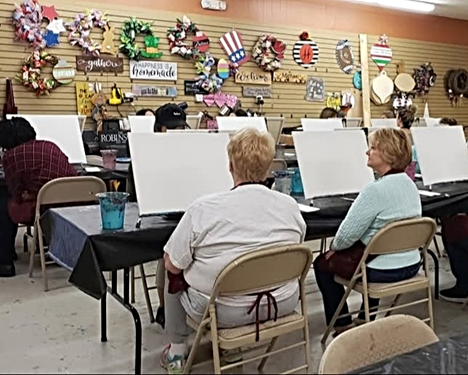 focusing on both prevention and symptom reduction.
As she gained experience, she identified a clear gap in the industry: practitioners lacked a cohesive, evidence-based way to help clients manage stress, especially when chronic illness was involved. Robyn explained that while professionals could pull strategies from yoga, meditation, or relaxation trainings, none of those resources addressed how to choose the right approach for a specific health condition. “You could take bits and pieces,” she says, “but you didn’t always know what was going to work for someone. It felt like trial and error. There wasn’t a system that showed you how to tailor stress-management techniques to different conditions."
To address that need, Robyn developed a structured training program through the Stress Management Institute for Health & Fitness Professionals, a project she began shaping in 2006 and formally launched in 2014. She designed the entire curriculum herself, grounding it in research, clinical insight, and CHES® planning principles. Participants receive lifetime access to the coursework, allowing them to adapt their approach as needs change. “It’s designed so you can really help the person—not just in a group setting, but one-on-one,” she explains.
Her program also aligns responsibilities with clearly defined scopes of practice, ensuring that each professional works appropriately within their training and expertise. Bachelor’s-prepared practitioners are equipped to support individuals managing chronic conditions, while personal trainers focus on prevention and lifestyle-related stressors. This structure allows clients to receive care that is both safe and tailored to their needs.
Healing in Nature: Building Retreat Experiences
One of Robyn’s most memorable moments came during a Meditative Stretch class when a participant asked, “Can we do this somewhere else?” The group 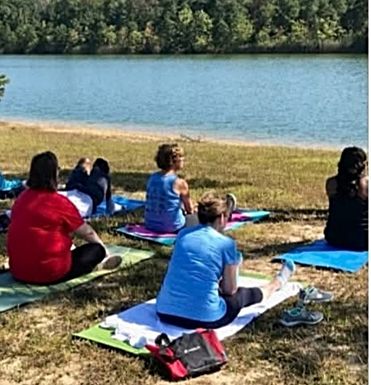 wanted to experience the same sense of calm—but in nature. That request inspired her first wellness retreat at Autumn Lake Winery, held just before COVID. With meditation and movement sessions by the water, participants connected with stress-relief practices in a deeper way. She later launched creative events such as Sip, Paint, and Meditate, blending mindfulness and artistic expression.
These experiences eventually led her to plan a Bahamas retreat for November 2027, open to anyone seeking a more immersive wellness experience. “We’re scaling it,” she says. “It’s going to be really cool.”
Teaching the Next Generation
Along with running her institute, Robyn teaches personal training at Camden County College, where she enjoys preparing students to enter the health and fitness industry. “I love working with students,” she says. “I teach them how I blend everything I do and then encourage them to find their own style.” Her guidance is straightforward and empowering—try new approaches, keep learning, build your own professional identity, and don’t hesitate to lead. “Don’t be afraid to be a leader in the industry,” she adds. “Learn as much as you can.”
The CHES® Credential: Opening Doors
Robyn first learned about CHES® during her undergraduate studies and pursued the credential early in her career. Over time, it became a valuable differentiator. “It really does help to open doors,” she says. “If I’m talking to medical professionals and I’m just fitness, it can be harder. When they hear ‘health education specialist,’ they take you more seriously.”
She is now considering the MCHES® credential to reflect the advanced-level work she is already performing in program development, training design, and evaluation.
Looking Ahead: March Relaunch and New Innovations
Robyn is preparing for a major relaunch of her coursework this March, supported by five Rowan University interns who are helping her strengthen the program’s medical and administrative structure. She is also developing a new app that integrates heart rate variability with stress-management strategie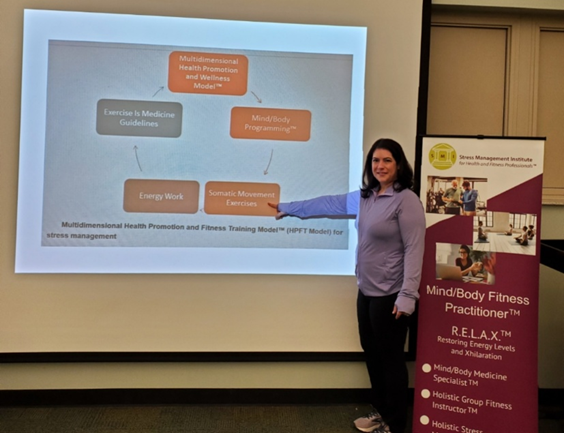 s and exercise programming, giving facilitators more insight into client wellness.
To improve continuity of care, she is building a simplified electronic health record that allows primary care providers to view clients’ stress and lifestyle data. “Physicians don’t always have time to go over health and lifestyle,” she explains. “But if they want to connect and look into it, they can see what’s going on.”
Her relaunched courses will offer both self-paced and guided options. At the same time, her husband is preparing to open a healthy meal-prep business designed to complement her institute’s focus on sustainable wellness practices. She also plans to revive a conference she developed before COVID—format still to be determined.
Advice for Emerging Professionals
Robyn’s advice for emerging health education specialists is rooted in both confidence and curiosity. She encourages new professionals to seek mentorship and stay open to trying new things as they discover their own strengths and interests. Pursuing certification early, she says, can provide valuable direction even if a career path is still taking shape. Above all, she urges them not to hesitate when it comes to stepping into leadership roles—innovation often begins with those willing to take the first step.