Sara Brown, MPH, CHES®, laughs easily, and that warmth shows up in the way she talks about her work. As an Epidemiologist II with STChealth, Brown works remotely from Southern California in the San Gabriel Valley. Her company is based in Phoenix, but her work stretches across state systems and public health partners, helping teams use immunization data to improve programs and outcomes.
Though it’s data-driven work, it is also deeply people-centered, because the end goal is always the same: helping communities access timely and equitable vaccination services.
A career built on curiosity
“I’ve had an eclectic mix of jobs,” she laughs. Her bachelor’s degree is in exercise science and nutrition, and she started with an internship in outpatient cardiac rehab. Even then, she was gravitating toward research and communication, working as both a research and teaching assistant for research methods courses. "I've always loved writing and research," she explains. "Breaking down technical information for people—that was my skill set."
A few years later, she returned to school for her MPH at the University of Southern California, initially focused on community health promotion. Then COVID-19 hit mid-program. “It was so interesting to me. We were learning about epidemiology as the pandemic was happening,” she says. The experience sharpened her interest in evaluation and what truly works.
After graduate school, Brown taught elementary students about nutrition and physical activity at Cedars-Sinai. She valued the work, but realized what energized her: "I got really excited when I got to write the reports or do the research."
That's when a former professor—now a decade-long mentor—reached out with a job offer at STChealth. The connection she'd built as his research assistant years earlier had quietly shaped her trajectory.
What STChealth does, and what “epi” looks like in her world
STChealth is an immunization registry software vendor supporting immunization information systems (IIS). The company works with state governments and other partners to support the backend of these systems, ensuring data is accurate, secure, and useful. It’s foundational infrastructure that affects everything from school vaccine requirements to public health reporting and campaign planning.
In her three and a half years there, Brown describes the experience as intense in the best way. “I don’t do traditional epi work,” she explains. “I work almost as a consultant.” Rather than working directly with individual patients, she collaborates with public health departments, state leadership, and executive stakeholders. That’s where her communication and evaluation skills become essential, because data only matters if the right people can understand it and act on it.
A major part of her work involves writing. “I do a lot of the academic and report writing for us,” she explains. “Anything that is written for our department and going to go to a client, I have my hands on at some point.” She supports contract-based research projects, literature reviews, analysis plans, and presentations. Lately, she has been focused on policy and guidance updates. Even in quieter periods, she stays in growth mode. “Whenever I have a lull between projects,” she says, “the goal is to learn a new technique,” often expanding into machine learning approaches that are shaping the future of analytic work.
At the same time, she’s navigating the ethical challenges of emerging tools, especially AI. “We have a new AI system,” she explains, “and it’s like, okay, how can it be incorporated ethically? Because HIPAA must be considered.”
The HPV vaccine project: what the data showed
One of Brown’s most rewarding projects began early in her time at STChealth and kept expanding. A client brought her team a question gaining traction in the research: does starting the HPV vaccine series earlier improve completion rates? While the series can begin at age 9, it’s typically recommended around the preteen visit, with the goal of finishing by 13 for best protection.
Brown's team found a clear answer: yes, starting earlier makes a big difference. Kids who began the HPV vaccine series at age 9 or 10 were 78% more likely to finish it compared to those who started at the typical age of 11 or 12. And this wasn't a hunch from a small study—the pattern held across different states and included 670,000 individuals. "That's the beauty of my job," she says. "I work with state-level data."
What excites Brown most is what the findings make possible next: understanding why earlier initiation improves completion so strategies can be sharpened. One likely factor is simple scheduling. At the preteen visit, kids often receive multiple vaccines, and families can hit “vaccine fatigue” with stacked appointments and follow-up doses. By contrast, age 9 is often a quieter spot in the schedule where there is more of a lull. “It may feel easier to say, ‘Let’s just do it now,’ because it’s one vaccine instead of stacking two or three,” she notes.
She also pointed to how the conversation with parents can shift perception. “There’s still a lot of stigma around it,” she says, describing how some families associate HPV vaccination with concerns about sexual activity. At age 9, parents are more likely to see it as a routine prevention decision rather than a topic linked to sexual debut. “At a younger age, it’s more about—this is cancer preventative.”
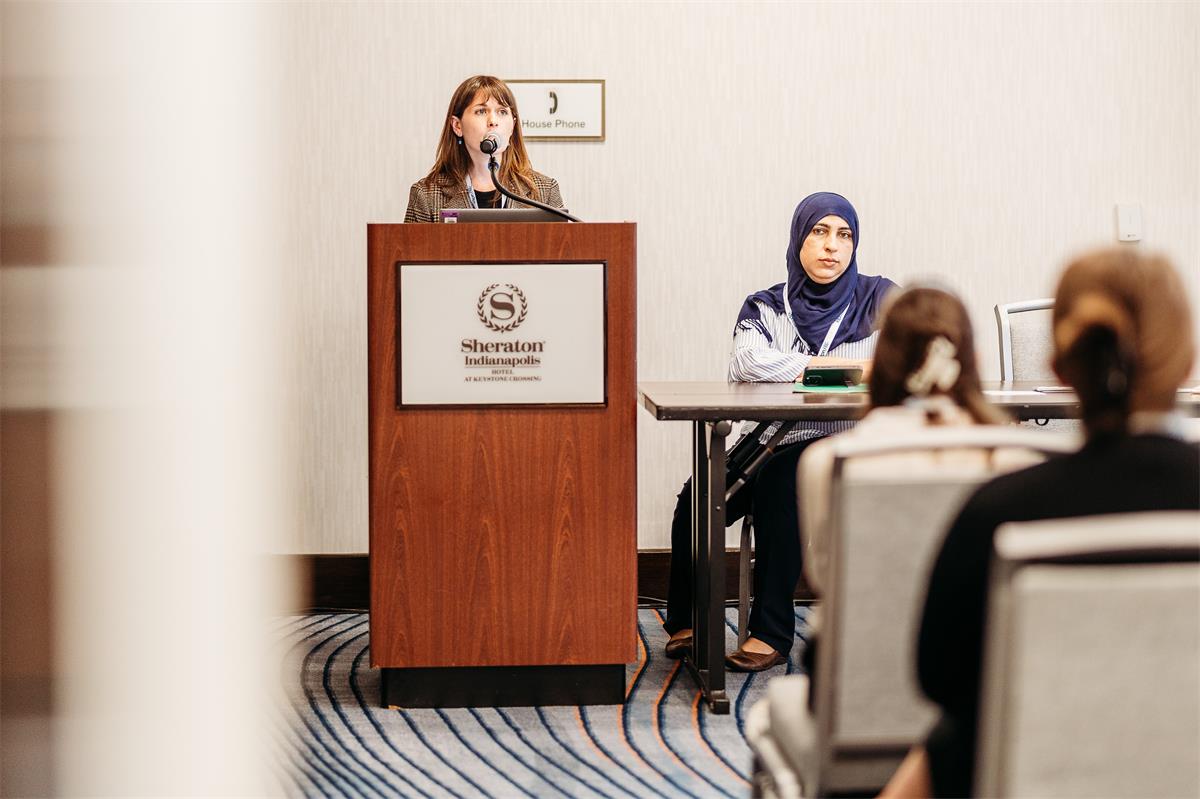
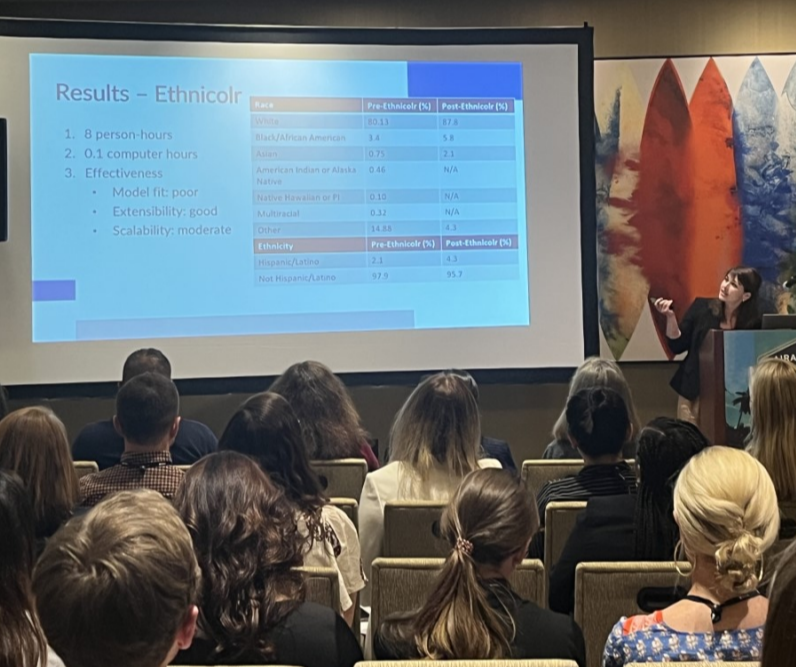
For Brown, the project reflects what she loves most about public health research. She has presented the findings at conferences, where the response has been immediate. “People do get really excited about it,” she says, because it’s actionable, and because HPV vaccination is one of the clearest examples of prevention with long-term cancer impact.
Why she pursued CHES® certification (even when timing was hard)
Brown first learned about CHES® certification during her MPH program, but she waited to pursue it until she was established in her role at STChealth. After encouragement from leadership, she committed. “It was something I really wanted to do.”
She also believed it would remain relevant, even though her role wasn’t a traditional health education position. “It is still applicable to my job,” she says. “I use it; it’s just at a different level.” She writes for different types of stakeholders, from company newsletters to public health departments, to executive leadership, and she speaks at conferences. “It’s different levels of communication,” she explains, “and just knowing your audience.”
Her advice: take the scary opportunities and let yourself learn
If Brown had to sum up her career philosophy, it would be this: you don’t need to feel ready to grow. “One important theme I realized throughout my career is just saying yes to things that you don’t necessarily even feel qualified for,” she explains.
She remembers feeling nervous to be a research assistant in undergrad, but she reminded herself that learning is part of the job. “Even mistakes are a learning opportunity,” she says. The same mindset carried her through statistics, evaluation work, and into her early days at STChealth. “Be collaborative and ask for help when you need it. Go in with that curiosity.”
When the STChealth job was first offered, she remembers hesitating and even doubting herself. Then she made a decision that would change her trajectory. “They thought of me. They reached out to me,” she says. “I thought—I’m going to do it. And I’m going to learn.”
The niche you’re looking for might not be the one you imagined
Brown doesn’t pretend career paths are predictable. “I never thought I would be here,” she admits, but she can see how every stop along the way mattered. “Every job I’ve had has contributed to what I do now, in some sort of way.”
She’s also quick to name what finally clicked: she once thought she wanted to teach every day, but realized she was most energized by the research, writing, and analysis behind the scenes. “I found my sweet spot here,” she says. “I get to still communicate that information, but I don’t have to do the same thing every day.”
For new professionals, especially those drawn to epidemiology, Brown’s message is to stop counting yourself out. “Take the opportunities that feel scary at first,” she says, “even if you don’t feel prepared, especially if they seem interesting.” Just as important, she adds, is building relationships. Network in the simplest way possible: talk to people, follow up, share contact info, and stay curious.