Dr. Melissa Oden will tell you she started in public health when she was two. She says it with a laugh, but the pride is real. After 25 years in the field, she still talks about the work as if it’s new, and that enthusiasm shows up in everything she builds for students.
Today, as an adjunct professor and Practice Experience Coordinator at the University of Texas at Arlington, Dr. Oden is the person students and community partners come to when it’s time to turn coursework into real work. She oversees the MPH practice experience from end to end, from community partner development to student placements. Her favorite moment is when the classroom version of public health gives way to the real one—and where the “light bulbs” go on. Her job is to help students get there.
A career built by saying yes to the field
Dr. Oden’s path to health education didn’t start in the usual place. Her first master’s degree was in social work, and she entered the workforce as a medical social worker. Right before entering the workforce as a social worker, she served with AmeriCorps as a social work intern at a nonprofit where she taught sex education to girls ages 6-18. That experience shifted everything.
She fell in love with what she didn’t yet have language for. It was health education. She eventually pursued an MPH, and she sat for the CHES® exam just a month or two before graduating. Later, she completed a doctorate in health education, with an emphasis that also exposed her to the behind-the-scenes realities of higher education, including budgeting, finance, and the operational decisions that shape what programs can do.
Through it all, she stayed grounded in practice. As she puts it, she’s always wanted to be involved in “anything I could get my hands on” as a student and professional.
The professional home that shaped her leadership
Ask Dr. Oden what most influenced her career, and she doesn’t hesitate: the Texas Public Health Association. Introduced to TPHA in her first MPH class, she has stayed involved for more than two decades, serving as president twice and helping usher in the organization’s 100th anniversary. For her, TPHA has been more than a membership. It has been a professional home and a launching point for relationships, leadership, and opportunity.
With roughly 500 members statewide, she says conferences feel like a family reunion, and she has seen how quickly a career can change based on who you meet and what rooms you can enter. That is part of why she helped create the first TPHA Student Chapter at UTA, even though many students join without fully understanding what a state association can offer. The shift happened when a student leader attended the TPHA conference in Brownsville. “It changed everything,” Oden said. Her takeaway is simple: to build engagement, students have to see the value firsthand.
When public health meets planning, behavior change becomes possible.
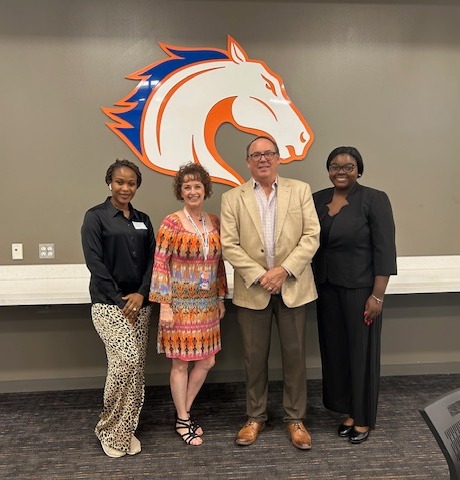
Dr. Oden lights up when she talks about the intersection of public health and urban planning, and it’s not a trendy talking point for her. It’s a partnership she has helped build over time through collaborative grant work, including five cycles of the CDC’s Plan for Health initiative. She served as project manager and later became the long-term liaison between the American Planning Association Texas Chapter and TPHA, helping expand conference programming and support the creation of an Urban Planning Section within TPHA.
What she wants health educators to take from that partnership is simple: “We can’t teach our way around missing infrastructure.” In her work with planners, social determinants of health became tangible, showing up in crosswalk timing, street design, and basic safety. Education matters, but without supportive environments, behavior change is not a real option for many people.
The “Complete Streets” workshop made it real for students
With the College of Planning and Architecture within close proximity to UTA’s public health program, Dr. Oden saw an easy opportunity to bring cross-sector collaboration to life for students.
She adapted a TPHA-style roundtable into a hands-on workshop that paired public health and urban planning students to tackle active transportation on and around campus. They examined key intersections, including a busy corridor cutting through campus where crossing can feel like “playing Frogger,” and asked what a not-very-walkable campus means for health and safety. Accessibility was central to the conversation, especially for students with disabilities, including UTA’s award-winning wheelchair basketball team.
The workshop drew 31 participants, including the campus president, and students have already asked to do it again. For Dr. Oden, it’s the kind of interdisciplinary, real-world learning that shifts how students see their role and how change gets made.
Her message to employers: “Look at CHES®.”
When asked what she wants students to leave school with, she answered with two audiences in mind: employers and emerging professionals. “One thing I would say to employers is please look at CHES®,” she said. “Do not discount the value of this certification. Credentialing is everything.”
In a crowded job market, credentials reduce uncertainty for employers. They communicate commitment, baseline competence, and professional accountability. For new graduates, especially, CHES® can function as a credibility bridge between education and practice.
Her advice for emerging professionals: think bigger than the program
Dr. Oden’s guidance for students reflects a shift many health educators experience as their careers grow: the move from individual-level programming to systems-level change. She still loves programming and group education. But macro-level change is where the conditions for health are set. “Policy drives behavior every single time,” she said.
Her specific advice?
- Build your critical thinking muscle. You’ll need it when policy, budgets, and people collide.
- Stay well-read, and don’t live only in the public health bubble.
- Learn how systems connect (yes, even those econ and government classes).
- Practice in-person networking. Screens don’t teach you how to persuade.
The connecting theme is compassion paired with standards. She wants students supported, and she wants them practice-ready.
A profession that works better when we stop operating in silos
Toward the end of the conversation, Dr. Oden shared a project she’d love to pursue next: deeper partnerships between health education and epidemiology.
In her MPH program, epidemiology is the most popular track, and she understands why. But she also sees what gets missed when professionals stay in their lanes. Epi can identify the problem and track the trend, but health education is often what makes the data actionable in communities.
It’s an important symbiosis and a reminder that CHES® and MCHES® professionals are not “extra” to public health work. We are essential to how public health knowledge becomes public health change.
Why her work matters right now
In a moment when a lot of emerging professionals are wondering where they fit, Dr. Oden’s message is steady and practical: get into the field early, keep building your professional identity, and learn how change actually happens. Push your work upstream, toward the policies and environments that determine what health even looks like in daily life.
That’s the work she keeps coming back to—helping students see the bigger system, then teaching them how to move it.