From Community Voice to Community Action: An Interview with Sandra McMasters, MS, MCHES®, PMP
Sandra McMasters has spent 20 years watching what happens when health systems do not talk to each other—and building the connections that fill the gap. From nutrition education with children and families to Medicaid advocacy, health literacy, and now community benefit work in Virginia and northeast North Carolina, her career has been defined by one conviction: people are not well served by systems that work alone.
Today, as a Community Benefit Project Manager with Sentara Health, McMasters helps turn community voice, data, partnerships, and strategy into health improvement plans that can reach people where they live.
Her path to health education began after working at Blue Shield, when she realized she wanted to be more “boots on the ground.” That opportunity came through a university cooperative extension program, where McMasters provided nutrition education in schools. At first, the focus was on teaching children about nutrition and healthy eating. But the more she worked with students, the more clearly she saw that health education could not stop at the classroom door.
“We started working with parents and with students, showing them what you could do on a budget,” McMasters says. “I just fell in love with that kind of work.”
Teaching children about healthy foods had to connect back to families, their budgets and access, and daily routines. That early experience helped her understand the importance of whole-person care and set the tone for the rest of her career.
The Credential That Opened Doors
From there, she moved into public health, then into health plan work focused on Medicaid populations. That shift gave her the opportunity to work at a broader advocacy level, serving communities across multiple counties in California. It also became the point in her career when MCHES® certification moved from something she had not yet considered to a professional credential that could open the door to a new role.
McMasters had earned a Master of Science in Health Education, but a health educator position she wanted in California required either an MPH or a Master of Health Education with MCHES® certification. The role involved running programs and health literacy efforts for Medicaid populations across 14 counties.
“That’s what led me to get the MCHES® credential,” she says. “It opened the door to that position.” Although she was nervous about the exam, passing on the first try gave McMasters a credential that reflected the work she was already doing and helped her qualify for roles where employers were looking for advanced public health preparation, including her current position.
Turning Community Voice into Community Health Improvement
Today, McMasters leads much of Sentara’s needs assessment work, supporting multiple assessments every three years across 12 hospitals and 12 ambulatory surgery centers. Her role spans a full arc, from planning and partnership development to grant alignment, regulation review, and coaching leaders on health literacy.
“We just ended our 2025 cycle in October, and now we’re starting the planning cycle for 2028 this summer,” she says. “It is a continuous system, but that’s what makes it truly effective.”
As part of that work, McMasters coordinates cross-sector partnerships with health districts, health systems, coalitions, nonprofits, and community partners. She describes her role as “bridging strategy, partnerships, and execution to improve health outcomes” across multiple regions.
One of the clearest examples of that approach is her work in Greater Prince William. In 2024, McMasters helped strengthen partnerships with the Prince William Health District and the Community Healthcare Coalition of Greater Prince William to complete a joint Community Health Needs Assessment.
The coalition had originally started in 2020, but like many collaborative efforts, it was disrupted by the COVID-19 pandemic. By 2024, partners needed support bringing people back to the table. McMasters helped rebuild relationships among health systems, the health district, and stakeholders, leading to a joint report that had not been done in that region before.
The outreach effort reflected how seriously partners took the work. More than 1,450 people completed the community health needs survey, including 527 responses in Spanish and 13 in Dari. And because data alone rarely tells the whole story, partners also held 17 community conversations to hear directly from residents and local organizations.
The result is a joint community health improvement plan focused on four priority areas: access to care, health communication, women’s and children’s health, and behavioral health. For McMasters, the biggest success was not only completing the assessment. It was changing the way partners worked together.
Continued Learning as a Priority
That kind of work takes more than public health knowledge. It also takes organization, patience, communication, and project management. McMasters holds the Project Management Professional (PMP) certification, which she said has been especially useful when managing multiple timelines, Gantt charts, partner needs, and reporting requirements.
Her MCHES® certification also helped give her the confidence to keep pursuing additional credentials. After earning MCHES®, she went on to earn her PMP and is interested in pursuing Lean Six Sigma training as well. “The MCHES® definitely gave me the confidence to pursue professional development and obtain additional credentials outside of a doctorate program,” she says.
 McMasters also brings a strong health literacy lens to her work. She has attended health literacy conferences for years and continues to apply those lessons internally and with community partners. In Virginia, she noted, materials may be written at a 10th-grade reading level, but she often encourages leaders and partners to make information even clearer and more accessible.
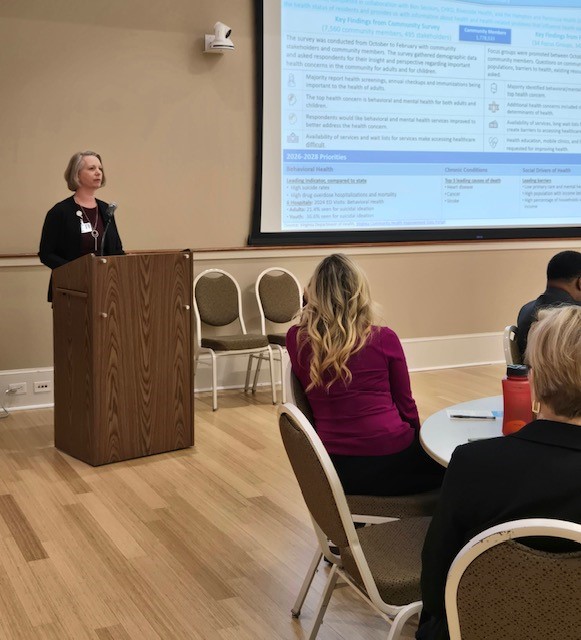
McMasters presented Sentara’s 2025 Community Health Needs Assessment results to the Virginia Funders Network, a statewide coalition of philanthropic investors that supports collaborative learning and action to strengthen communities across Virginia. The opportunity allowed her to share key findings from the assessment process with funders who are invested in addressing community needs through strategic, coordinated efforts.
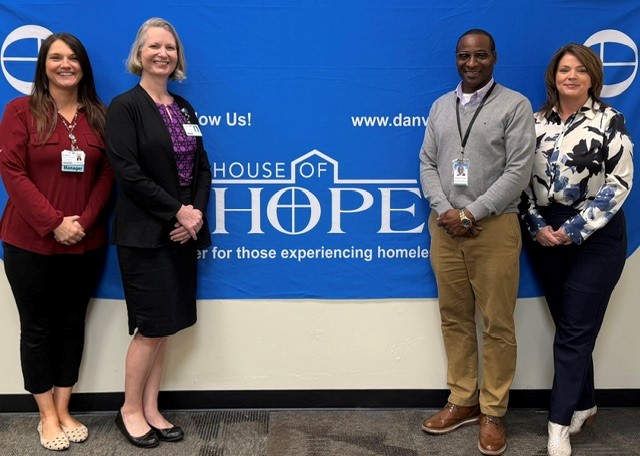
In Danville, Virginia, Sentara provided grant funding to support House of Hope in its work with people experiencing homelessness. McMasters said the organization’s approach stood out because it goes beyond providing shelter, connecting guests with trauma-informed support, law enforcement partnerships, mental health advocacy, workforce development, resume building, computer skills, and food pantry access.
Advice for Emerging Professionals
Her advice for emerging professionals is simple, practical, and grounded in experience: build relationships. McMasters has noticed that newer professionals are often comfortable communicating electronically, but email alone is not always enough. A phone call, Teams meeting, or face-to-face conversation can help partners feel heard and understood.
“Letting them see your face if you can’t be in person makes them feel like there really is someone there listening to them,” she says.
She also encourages early-career professionals to strengthen their project-planning skills. Timelines, planning tools, and organized workflows are not just administrative details. In this profession, they can be the difference between a good idea and an initiative that actually moves forward.
For experienced professionals who qualify for MCHES® certification, McMasters encourages them not to sidestep the advanced credential. She has shared that same advice with peers who were unsure whether to pursue CHES® or MCHES®. When professionals already have the experience to qualify for MCHES®, she encourages them to trust what they have learned through practice.
“Don’t sidestep it,” she says. “Go full-on. That’s what I did, and I was so grateful I made that choice to validate my skillset.” It is this same instinct that has guided her for two decades toward diligent work, fuller connection, and the belief that meeting communities where they are is not a strategy — it is the whole point.